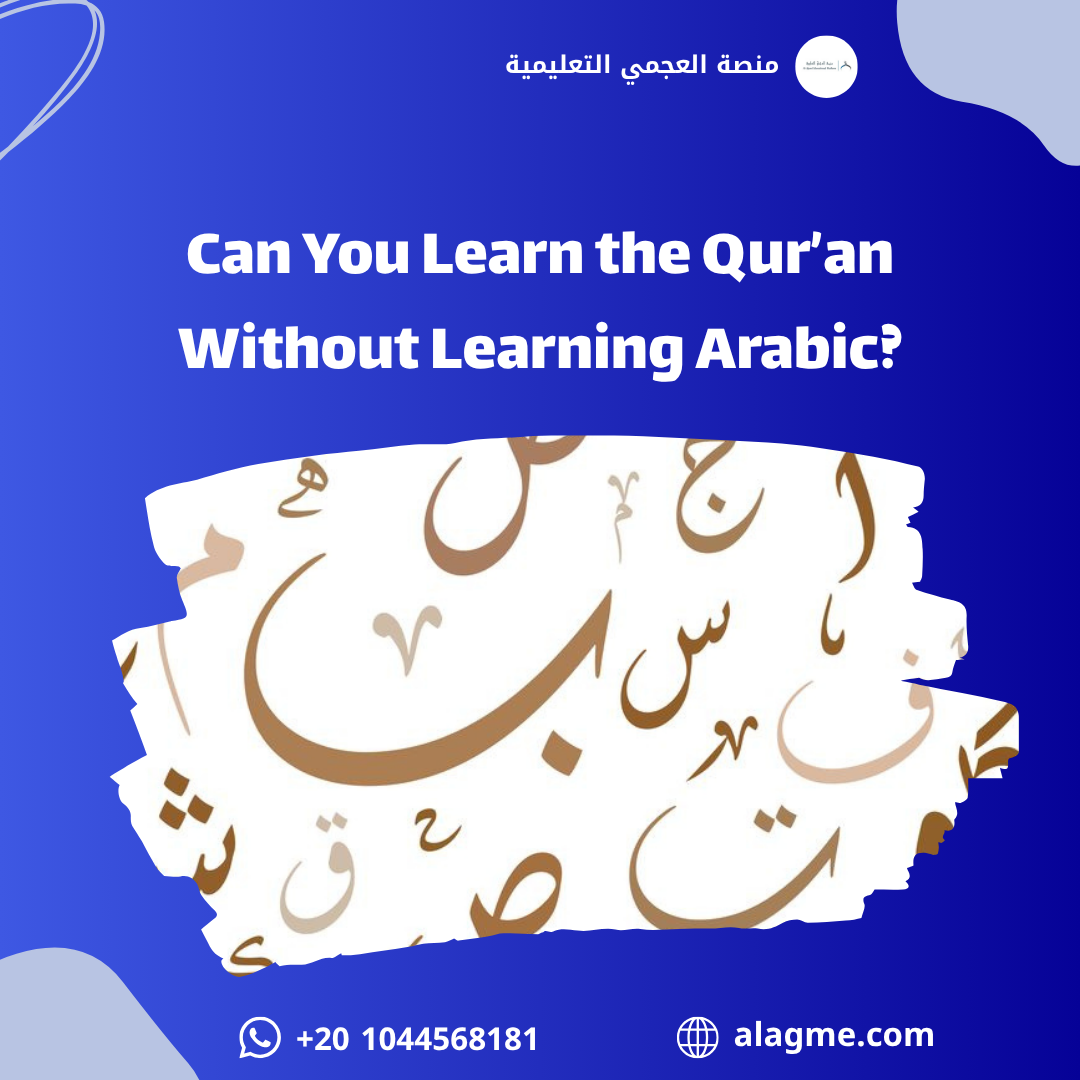
For many Muslims around the world, especially those who do not speak Arabic, a deeply important question often arises: can you truly learn the Qur’an without knowing Arabic? This question is not just about language—it reflects a sincere desire to connect with the words of Allah, to understand them, and to live by their guidance. The answer, however, is not simply yes or no. It requires a deeper look at what it really means to “learn” the Qur’an.
The Qur’an was revealed in Arabic, a language known for its richness, precision, and expressive depth. Every word in the Qur’an is carefully chosen, carrying meanings that are often layered and nuanced. Because of this, the Arabic language is inseparable from the Qur’an in its original form. The sound, rhythm, and structure of the verses are all part of the divine message. Yet, despite this close connection, not knowing Arabic does not prevent a person from beginning their journey with the Qur’an.
At the most basic level, learning the Qur’an can mean learning how to recite it. In this sense, it is entirely possible to learn the Qur’an without understanding Arabic as a language. Millions of Muslims who are not native Arabic speakers learn how to read the Qur’an using proper pronunciation and recitation rules. Through learning the Arabic alphabet, practicing letter sounds, and applying Tajweed rules, they are able to recite the Qur’an correctly and beautifully. This shows that recitation and language fluency are not the same thing.
However, recitation is only one part of the relationship with the Qur’an. True learning goes beyond pronunciation—it involves understanding the meanings, reflecting on the messages, and allowing the Qur’an to shape one’s thoughts and actions. This is where the question becomes more complex. Without knowing Arabic, a person relies on translations to access the meanings of the Qur’an. These translations are incredibly valuable and make the message accessible to people all over the world.
Translations help readers grasp the general meaning of verses, understand key teachings, and connect emotionally with the message. They allow non-Arabic speakers to reflect on themes such as faith, patience, gratitude, and justice. For many, translations are the first step toward building a meaningful relationship with the Qur’an. They make it possible to study, contemplate, and apply its guidance in everyday life.
At the same time, it is important to understand that translations are not the Qur’an itself, but rather interpretations of its meanings. The original Arabic text contains layers of linguistic beauty and depth that are difficult—sometimes impossible—to fully capture in another language. A single Arabic word may carry multiple meanings, and the structure of a sentence can add emphasis or subtlety that does not easily translate. Because of this, relying solely on translations may limit one’s understanding of the full richness of the Qur’an.
This is why many scholars encourage learning at least some basic Arabic alongside Qur’anic study. Not necessarily to become fluent, but to become familiar with key words, common expressions, and recurring themes. Even a small effort in learning Arabic can significantly deepen one’s connection to the Qur’an. Recognizing frequently repeated words, understanding simple sentence structures, and identifying patterns can transform the reading experience from passive to deeply engaging.
Another important aspect to consider is the spiritual dimension of recitation. Even without understanding every word, many Muslims feel a deep emotional and spiritual connection when they recite or listen to the Qur’an. The sound of the Arabic recitation has a unique impact on the heart. It brings calmness, focus, and a sense of closeness to Allah. This shows that the relationship with the Qur’an is not based on intellectual understanding alone, but also on spiritual experience.
Moreover, learning the Qur’an without Arabic does not mean remaining at a fixed level. It can be the beginning of a gradual journey. A person may start by learning how to recite, then move on to reading translations, then gradually learn basic Arabic vocabulary. Step by step, their understanding grows, and their connection deepens. This gradual approach makes the process more accessible and less overwhelming.
It is also worth noting that intention plays a central role in this journey. A person who sincerely seeks to learn the Qur’an, even with limited language ability, is engaged in an act of worship. The effort itself is valuable, and every step taken toward understanding the Qur’an is meaningful. What matters most is consistency, sincerity, and a genuine desire to grow closer to the words of Allah.
In today’s world, learning the Qur’an without knowing Arabic has become easier than ever. With the availability of online resources, translations, audio recitations, and structured courses, anyone can begin their journey regardless of their background. Qualified teachers can guide learners step by step, helping them improve their recitation and deepen their understanding over time.
In conclusion, yes—it is possible to learn the Qur’an without knowing Arabic, especially when it comes to recitation and basic understanding through translations. However, to fully experience the depth, beauty, and precision of the Qur’an, learning at least some level of Arabic becomes highly beneficial. The best approach is not to see it as an either-or choice, but as a journey that begins where you are and gradually moves forward.
So if you have been hesitating because you do not know Arabic, do not let that stop you. Start with what you can—learn to recite, read translations, reflect on meanings—and allow your connection with the Qur’an to grow naturally. Over time, you may find yourself drawn to the language itself, opening new doors of understanding and bringing you closer to the divine message in ways you never imagined.
💬 اترك تعليقك