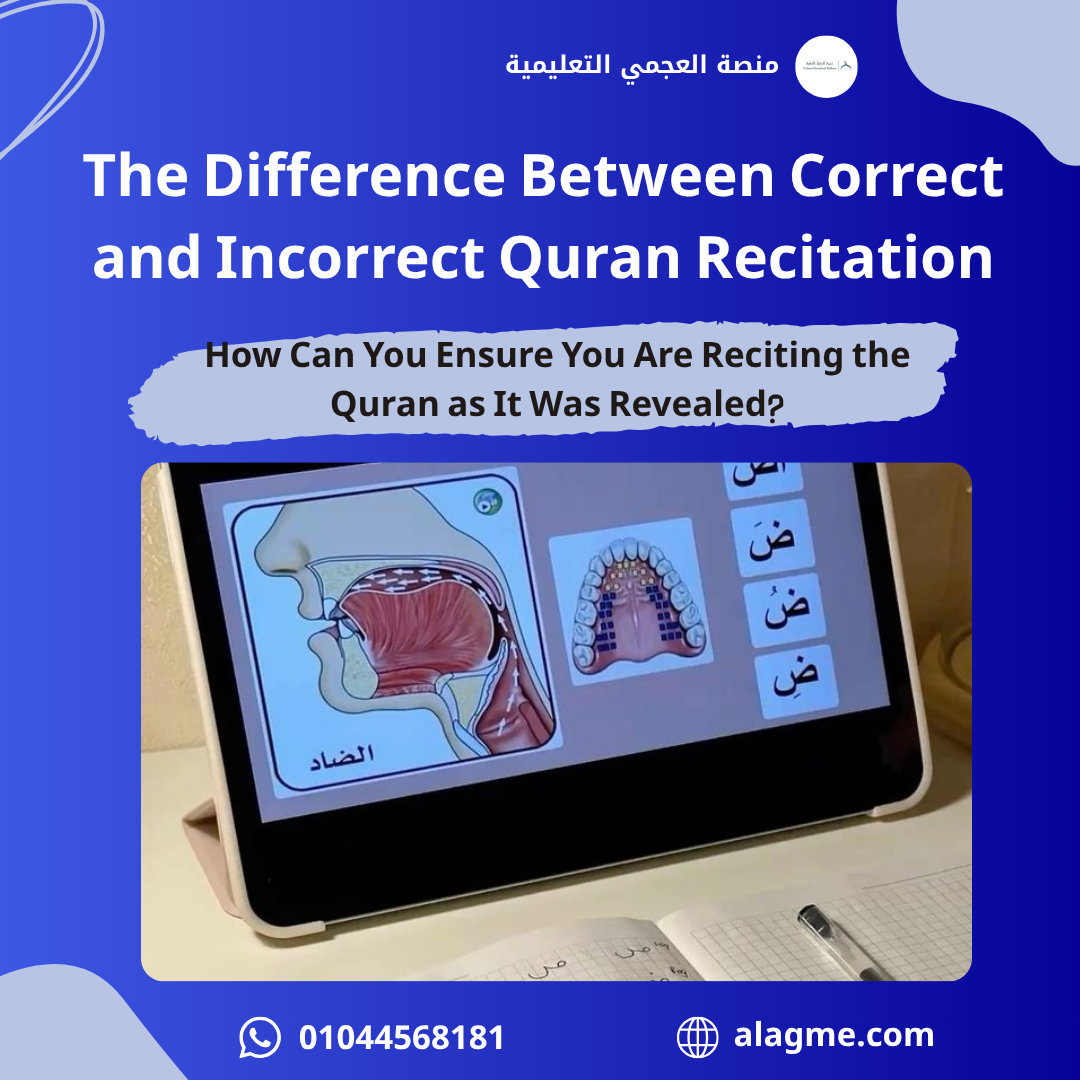
The Holy Quran is the word of Allah Almighty revealed to Prophet Muhammad ﷺ. Allah Himself has guaranteed its preservation in both wording and meaning, as He says:
"Indeed, it is We who sent down the Reminder, and indeed, We will surely preserve it." (Quran 15:9)
One of the manifestations of this divine preservation is that Muslims have transmitted the Quran from generation to generation exactly as they heard it from the Prophet ﷺ, preserving not only its words and letters but also its manner of recitation and delivery. For this reason, reciting the Quran is not merely ordinary reading; it is a great act of worship with its own etiquettes and rules that ensure the Quran remains unchanged and unaltered as it was revealed.
With the widespread availability of Quran memorization circles, educational courses, printed copies of the Quran, and audio recordings, many Muslims have become increasingly eager to improve their recitation. Yet an important question remains in the minds of many: What is the difference between correct and incorrect Quran recitation? And how can a reader know whether they are reciting the Quran properly?
Understanding the difference between correct and incorrect recitation is not limited to specialists or students of Tajweed. Rather, it is something every Muslim who recites the Quran should understand, because the goal is not simply to read words but to recite the words of Allah exactly as they were revealed to His Messenger ﷺ.
Correct recitation is a recitation in which letters are pronounced from their proper articulation points and the fundamental rules of Tajweed are observed without addition, omission, or distortion. Incorrect recitation, on the other hand, involves mistakes that affect the pronunciation of letters, words, or meanings, whether due to ignorance of the rules or insufficient training in proper recitation.
The first major difference between correct and incorrect recitation concerns the articulation points of the letters (Makharij al-Huruf). Every letter in the Arabic language has a specific point from which its sound originates. For example, when the letter Qāf (ق) is pronounced correctly, it sounds distinctly different from Kāf (ك), and when the letter Ḍād (ض) is pronounced from its proper articulation point, it differs clearly from Ẓā’ (ظ) or Dāl (د).
In correct recitation, the reader carefully gives each letter its proper articulation point and characteristics. In incorrect recitation, letters may become mixed with one another, causing one letter to sound like another. In some cases, this can even change the meaning of the words being recited.
Common examples include confusing Ḍād (ض) with Ẓā’ (ظ), Ṣād (ص) with Sīn (س), or Ṭā’ (ط) with Tā’ (ت). Such mistakes are common among beginners, which is why Tajweed teachers place great emphasis on mastering the articulation points of letters before moving on to other rules.
Another important distinction is that correct recitation observes vowel marks accurately. The Fatḥah, Ḍammah, and Kasrah are not merely symbols written in the Mushaf; they are essential parts of the words themselves. Changing a single vowel can sometimes alter the meaning entirely.
For this reason, a proficient reciter pronounces the vowels exactly as they appear in the Quran without adding to or reducing them. Incorrect recitation may involve changing certain vowels or failing to pronounce them clearly, resulting in linguistic or semantic errors.
Correct recitation is also characterized by proper application of the rules of elongation (Madd) according to their prescribed lengths. The various forms of Madd are among the beauties of Quranic recitation and were transmitted through direct oral tradition from the Prophet ﷺ. When reciting, a reader elongates sounds only where they are meant to be elongated and by the appropriate amount.
Incorrect recitation may involve excessive elongation or insufficient elongation in ways that compromise proper performance. Some people mistakenly believe that beautiful recitation depends on prolonging sounds as much as possible. In reality, true beauty lies in adhering to the established rules of recitation without exaggeration or artificiality.
Another hallmark of correct recitation is the proper application of Ghunnah (nasalization) in its designated places. Ghunnah is a vocal characteristic associated with certain rules such as Idgham and Ikhfa’. When performed correctly, it adds beauty and harmony to the recitation. However, neglecting it or applying it where it does not belong negatively affects the quality and correctness of the recitation.
Another important difference between correct and incorrect recitation involves observing the rules of stopping and starting (Waqf and Ibtida’). The Quran contains interconnected meanings, and pausing in an inappropriate place may distort or damage the intended meaning.
When a reciter stops at the completion of a meaningful statement and resumes correctly afterward, they follow the proper etiquette of recitation and help listeners understand the verses. Random pauses in the middle of meanings or beginning with words that are closely connected to what came before may lead to misunderstanding or reduce the impact of the message.
Correct recitation is also characterized by measured and deliberate reading. Allah commanded His Prophet ﷺ:
"And recite the Quran with measured recitation." (Quran 73:4)
Measured recitation means reading clearly and calmly, allowing the reader to pronounce the letters correctly and apply the relevant rules properly.
Incorrect recitation is often marked by excessive speed that prevents letters from receiving their due rights, causing sounds to blend together and important rules to be neglected. This does not mean that faster recitation is always prohibited, but speed should never lead to mistakes or diminish the clarity of the recitation.
Another significant aspect of correct recitation is that it helps the reader reflect upon the Quran and attain humility and concentration during recitation. When a Muslim recites calmly and attentively, giving the verses their proper due, they become more capable of understanding and interacting with the meanings. In contrast, hurried or incorrect recitation may reduce the experience to merely pronouncing words without reflection or heartfelt engagement.
Among the common mistakes that fall under incorrect recitation is what scholars call Lahn Jali (Obvious Error). This refers to clear mistakes that alter letters, words, or vowel markings in a way that affects meaning. Scholars have considered this one of the most serious types of recitation errors because it directly impacts the wording of the Quran.
There is also Lahn Khafi (Hidden Error), which refers to mistakes related to some of the more subtle rules of Tajweed that are usually recognized only by specialists. Although its impact is less severe than that of obvious errors, striving to avoid it is part of perfecting and beautifying one's recitation.
Some people may wonder whether a reciter must master every rule of Tajweed for their recitation to be considered correct. The answer is that Muslims are required to exert their best efforts to correct their recitation and avoid significant mistakes. Complete mastery is a higher level that is achieved through continuous learning and practice. The Prophet ﷺ gave glad tidings of double reward to those who struggle while learning to recite the Quran.
Therefore, beginners should never become discouraged by their mistakes. Every skilled reciter today was once a beginner who needed correction, guidance, and practice.
Among the best ways to move from incorrect to correct recitation are regularly listening to proficient reciters, reading under the supervision of a qualified teacher, maintaining daily revision, and learning the fundamentals of Tajweed gradually. Tajweed is not merely a set of theoretical rules; it is a practical skill that improves through repetition and consistent practice.
Recording one's own recitation and listening to it afterward can also be extremely beneficial. Many students discover mistakes they never noticed while reading until they hear a recording of themselves.
In conclusion, the difference between correct and incorrect recitation is not merely a matter of having a beautiful voice or an attractive style. Rather, it lies in the extent to which a person adheres to reciting the Quran as it was revealed to the Messenger of Allah ﷺ. Correct recitation preserves the words of the Quran, aids in understanding its meanings, and increases humility and reflection. Incorrect recitation, on the other hand, may alter the wording or diminish the impact of the verses on the heart.
For this reason, every Muslim should make improving their recitation a lifelong goal. They should strive to learn whatever is necessary to correct their reading and always remember that the Quran is the word of Allah Almighty. It deserves our utmost effort to recite it in the best manner possible. Every step taken toward correct recitation is a step toward honoring the Book of Allah, earning reward, and attaining the humility and tranquility that fill the heart with light and peace.
💬 اترك تعليقك