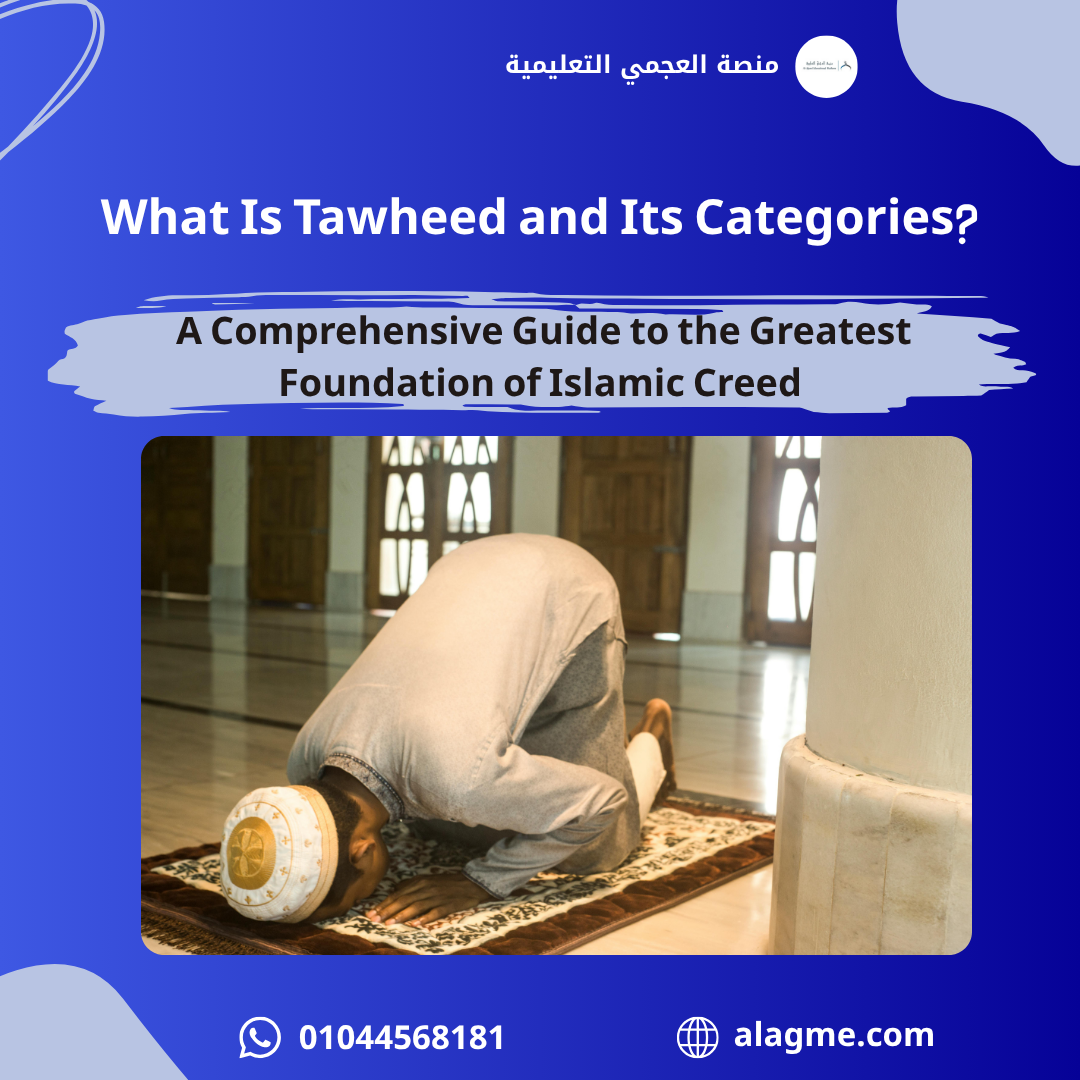
Tawheed (the Oneness of Allah) is the greatest foundation of Islam. It is the first obligation upon every human being and the central message of every prophet and messenger (peace be upon them). Allah did not send a messenger or reveal a scripture except to call people to worship Him alone, without any partner. The Noble Qur'an is filled with verses that invite mankind to Tawheed, explain its virtues, and warn against shirk (associating partners with Allah), because true success in this life and the Hereafter can only be attained through affirming the Oneness of Allah.
Tawheed is not merely a phrase spoken by the tongue; rather, it is a firmly established belief rooted in the heart, whose effects become evident in a person's speech, actions, character, and conduct. A believer who truly understands Tawheed knows that Allah alone is the Creator, the Provider, and the Controller of all affairs, and that He alone deserves every act of worship. Therefore, the believer directs all supplication, fear, hope, love, reliance, and every other form of worship exclusively to Him.
In this article, we will explore the meaning of Tawheed, its significance, its three categories, its impact on a Muslim's life, and some common misconceptions related to it.
What Is Tawheed?
Linguistically, the word Tawheed comes from the Arabic verb wahhada, meaning to make something one or to affirm its oneness.
In Islamic terminology, Tawheed means singling out Allah, the Almighty, in everything that is uniquely His: His Lordship (Rububiyyah), His exclusive right to be worshipped (Uluhiyyah), and His Names and Attributes (Asma' wa Sifat).
This means believing that Allah alone is the Creator and Controller of the universe, that He alone deserves every act of worship, and that He possesses the Most Beautiful Names and the Perfect Attributes that belong to Him alone.
Allah says:
﴿وَمَا أَرْسَلْنَا مِنْ قَبْلِكَ مِنْ رَسُولٍ إِلَّا نُوحِي إِلَيْهِ أَنَّهُ لَا إِلَٰهَ إِلَّا أَنَا فَاعْبُدُونِ﴾ [الأنبياء: 25]
"And We did not send any messenger before you except that We revealed to him, 'There is no deity worthy of worship except Me, so worship Me alone.'" (Qur'an 21:25)
This verse clearly shows that all the prophets shared one common mission: calling people to worship Allah alone and abandon the worship of anything besides Him.
Why Is Tawheed the Greatest Foundation of Islam?
Tawheed holds the highest status in Islam because it is the foundation upon which all righteous deeds are built. No act of worship is accepted without it.
Allah says:
﴿وَلَقَدْ أُوحِيَ إِلَيْكَ وَإِلَى الَّذِينَ مِنْ قَبْلِكَ لَئِنْ أَشْرَكْتَ لَيَحْبَطَنَّ عَمَلُكَ﴾ [الزمر: 65]
"Indeed, it has been revealed to you and to those before you that if you associate partners with Allah, your deeds will surely become worthless." (Qur'an 39:65)
Even if a person performs many acts of worship such as prayer, fasting, and charity, committing major shirk nullifies all of those deeds.
Tawheed was also the very first message delivered by the Prophet Muhammad ﷺ. When he sent Mu'adh ibn Jabal (may Allah be pleased with him) to Yemen, he instructed him:
"Let the first thing you call them to be the testimony that there is no deity worthy of worship except Allah."
This demonstrates that correcting one's belief takes precedence over every other aspect of religion.
The Categories of Tawheed
After carefully examining the Qur'an and the Sunnah, Islamic scholars concluded that the texts consistently revolve around three interconnected categories of Tawheed:
Tawheed Ar-Rububiyyah (Oneness of Lordship)
Tawheed Al-Uluhiyyah (Oneness of Worship)
Tawheed Al-Asma' wa As-Sifat (Oneness of Allah's Names and Attributes)
These categories are not separate beliefs; rather, they complement one another, and complete Tawheed can only be achieved by believing in all three.
First: Tawheed Ar-Rububiyyah (Oneness of Lordship)
Tawheed Ar-Rububiyyah means affirming Allah alone in His divine actions. It is the belief that He alone is the Creator, the Provider, the Sovereign, the Controller of all affairs, the Giver of life, the Taker of life, and the One who governs the entire universe.
There is no creator besides Allah, no provider other than Him, and no one who independently owns or controls the universe except Allah.
Allah says:
﴿اللَّهُ خَالِقُ كُلِّ شَيْءٍ﴾ [الزمر: 62]
"Allah is the Creator of all things." (Qur'an 39:62)
He also says:
﴿أَلَا لَهُ الْخَلْقُ وَالْأَمْرُ﴾ [الأعراف: 54]
"Surely, His is the creation and the command." (Qur'an 7:54)
The pagan Arabs during the lifetime of the Prophet ﷺ acknowledged this category of Tawheed. They recognized that Allah alone created and provided for them. Allah says:
﴿وَلَئِنْ سَأَلْتَهُمْ مَنْ خَلَقَ السَّمَاوَاتِ وَالْأَرْضَ لَيَقُولُنَّ اللَّهُ﴾ [لقمان: 25]
"If you ask them who created the heavens and the earth, they will surely say, 'Allah.'" (Qur'an 31:25)
However, this acknowledgment alone did not make them Muslims because they failed to fulfill the second category of Tawheed—devoting worship exclusively to Allah.
One of the greatest fruits of believing in Allah's Lordship is that it fills the believer's heart with peace and confidence. Knowing that Allah alone controls every affair frees a person from fear of creation and protects them from despair during hardships.
Second: Tawheed Al-Uluhiyyah (Oneness of Worship)
This is the greatest category of Tawheed and is also known as Tawheed Al-'Ibadah (Oneness of Worship).
It means dedicating every outward and inward act of worship exclusively to Allah.
No act of worship should ever be directed to anyone besides Him, whether it is prayer, supplication, sacrifice, vows, fear, hope, reliance, seeking help, or seeking rescue in matters that only Allah can accomplish.
Allah says:
﴿وَاعْبُدُوا اللَّهَ وَلَا تُشْرِكُوا بِهِ شَيْئًا﴾ [النساء: 36]
"Worship Allah and associate nothing with Him." (Qur'an 4:36)
He also says:
﴿إِيَّاكَ نَعْبُدُ وَإِيَّاكَ نَسْتَعِينُ﴾ [الفاتحة: 5]
"You alone we worship, and You alone we ask for help." (Qur'an 1:5)
This is the category over which the prophets and their people differed. Many people acknowledged Allah's existence and even worshipped Him, yet they also directed acts of worship to idols, saints, or other beings besides Allah.
For this reason, the Prophet ﷺ called people to worship Allah alone and said:
"Say, 'There is no deity worthy of worship except Allah,' and you will succeed."
The statement "La ilaha illa Allah" does not merely mean acknowledging Allah's existence; its true meaning is "There is no deity worthy of worship except Allah."
Third: Tawheed Al-Asma' wa As-Sifat (Oneness of Allah's Names and Attributes)
This category of Tawheed means believing in every Name and Attribute by which Allah described Himself in the Noble Qur'an or by which His Messenger ﷺ described Him in the authentic Sunnah, without distortion, denial, asking how, or likening Allah to His creation.
Allah possesses the Most Beautiful Names, such as Ar-Rahman (The Most Compassionate), Ar-Raheem (The Most Merciful), Al-Hakeem (The All-Wise), Al-'Aleem (The All-Knowing), As-Samee' (The All-Hearing), and Al-Baseer (The All-Seeing).
Likewise, He possesses the perfect Attributes that befit His Majesty, including knowledge, power, mercy, wisdom, hearing, and sight.
Allah says:
﴿وَلِلَّهِ الْأَسْمَاءُ الْحُسْنَى فَادْعُوهُ بِهَا﴾ [الأعراف: 180]
"And to Allah belong the Most Beautiful Names, so call upon Him by them." (Qur'an 7:180)
He also says:
﴿لَيْسَ كَمِثْلِهِ شَيْءٌ وَهُوَ السَّمِيعُ الْبَصِيرُ﴾ [الشورى: 11]
"There is nothing like unto Him, and He is the All-Hearing, the All-Seeing." (Qur'an 42:11)
This verse beautifully combines two fundamental principles: affirming Allah's Attributes while declaring that nothing resembles Him.
A Muslim believes in Allah's Names and Attributes exactly as they appear in the Qur'an and the authentic Sunnah while affirming that Allah is completely unlike His creation.
Are the Categories of Tawheed Separate?
The three categories of Tawheed are inseparably connected and cannot be separated from one another.
Whoever believes that Allah alone is the Creator and Provider must also worship Him alone.
Likewise, whoever sincerely worships Allah must believe in His Beautiful Names and Perfect Attributes exactly as they have been revealed.
Therefore, complete Tawheed is achieved only by affirming and practicing all three categories together.
The Fruits of Tawheed in a Muslim's Life
Tawheed has profound effects on every aspect of a believer's life. It is not merely a theoretical doctrine but a complete way of life.
One of its greatest blessings is the tranquility it brings to the heart, because the believer knows that every affair is in Allah's hands.
It liberates a person from fear of creation, causing the heart to become attached only to Allah.
Tawheed also nurtures sincerity in worship, ensuring that every deed is performed solely for Allah, free from showing off or seeking people's praise.
Another fruit of Tawheed is strong reliance upon Allah. A Muslim takes the necessary lawful means while recognizing that benefit and harm ultimately come only by Allah's permission.
It also strengthens patience during hardships because the believer knows that everything happens according to Allah's wisdom and decree.
Tawheed cultivates humility, reminding the servant that they are constantly in need of their Lord.
Among its greatest rewards are security and guidance. Allah says:
﴿الَّذِينَ آمَنُوا وَلَمْ يَلْبِسُوا إِيمَانَهُمْ بِظُلْمٍ أُولَٰئِكَ لَهُمُ الْأَمْنُ وَهُمْ مُهْتَدُونَ﴾ [الأنعام: 82]
"Those who believe and do not mix their faith with wrongdoing—for them there will be security, and they are rightly guided." (Qur'an 6:82)
Common Misconceptions About Tawheed
One common misconception is that Tawheed simply means believing that Allah exists. In reality, Tawheed also requires dedicating every act of worship exclusively to Him.
Another misconception is that it is permissible to supplicate to or seek supernatural help from anyone besides Allah in matters that only Allah has the power to accomplish. In Islam, such acts are forms of worship and must be directed solely to Allah.
Some people also believe that studying Tawheed is only necessary for scholars or students of Islamic knowledge. In fact, Tawheed is the very first branch of knowledge that every Muslim is required to learn because it is the foundation of the religion and the key to salvation.
Another common mistake is neglecting to learn Allah's Beautiful Names and Attributes, even though knowing them increases faith and strengthens one's relationship with Allah.
How Can a Muslim Live According to Tawheed?
Living according to Tawheed begins with knowing Allah through the Noble Qur'an and the authentic Sunnah.
A Muslim should strive to make every act of worship sincere for Allah alone, seeking nothing but His pleasure.
They should frequently engage in supplication and remembrance of Allah, recite and reflect upon the Qur'an, and study authentic Islamic creed from trustworthy sources.
A believer should also avoid everything that contradicts or weakens Tawheed, including shirk, showing off (riya'), and becoming excessively attached to anything besides Allah.
Finally, Muslims should constantly strengthen their reliance upon Allah while taking the lawful means that He has prescribed.
Conclusion
Tawheed is the greatest message brought by Islam and the central call shared by every prophet and messenger. It is far more than a statement spoken by the tongue—it is a living reality that shapes every aspect of a believer's life. A true believer worships Allah alone, relies upon Him alone, seeks His help alone, and knows with certainty that all goodness is in His hands.
The reality of Tawheed consists of three complementary categories: Tawheed Ar-Rububiyyah (Oneness of Lordship), Tawheed Al-Uluhiyyah (Oneness of Worship), and Tawheed Al-Asma' wa As-Sifat (Oneness of Allah's Names and Attributes). These categories are inseparable, and together they form the complete understanding of Islamic monotheism.
When Muslims learn these categories, understand their meanings, and live according to them, their faith grows stronger, their certainty increases, their hearts become more attached to Allah, their worship becomes more sincere, and their lives become more upright and peaceful.
For this reason, every Muslim should make learning Tawheed one of their highest priorities. It is the foundation of Islamic creed, the key to salvation, the first matter for which every servant will be held accountable, and one of the greatest means of attaining Allah's pleasure and everlasting Paradise.
💬 اترك تعليقك